Latest from BCA Research


The US economy has never entered a demand-driven recession without labour demand running below labour supply and without the job vacancy rate running below the unemployment rate. Right now though, US labour demand is still running 1.7 million workers above labour supply, and the job vacancy rate is running comfortably above the unemployment rate. This suggests that the labour market is still supply-constrained, and that a demand-driven recession is not imminent. We discuss the investment implications. Plus, more about our ‘trade of the century’: long cotton versus coffee.

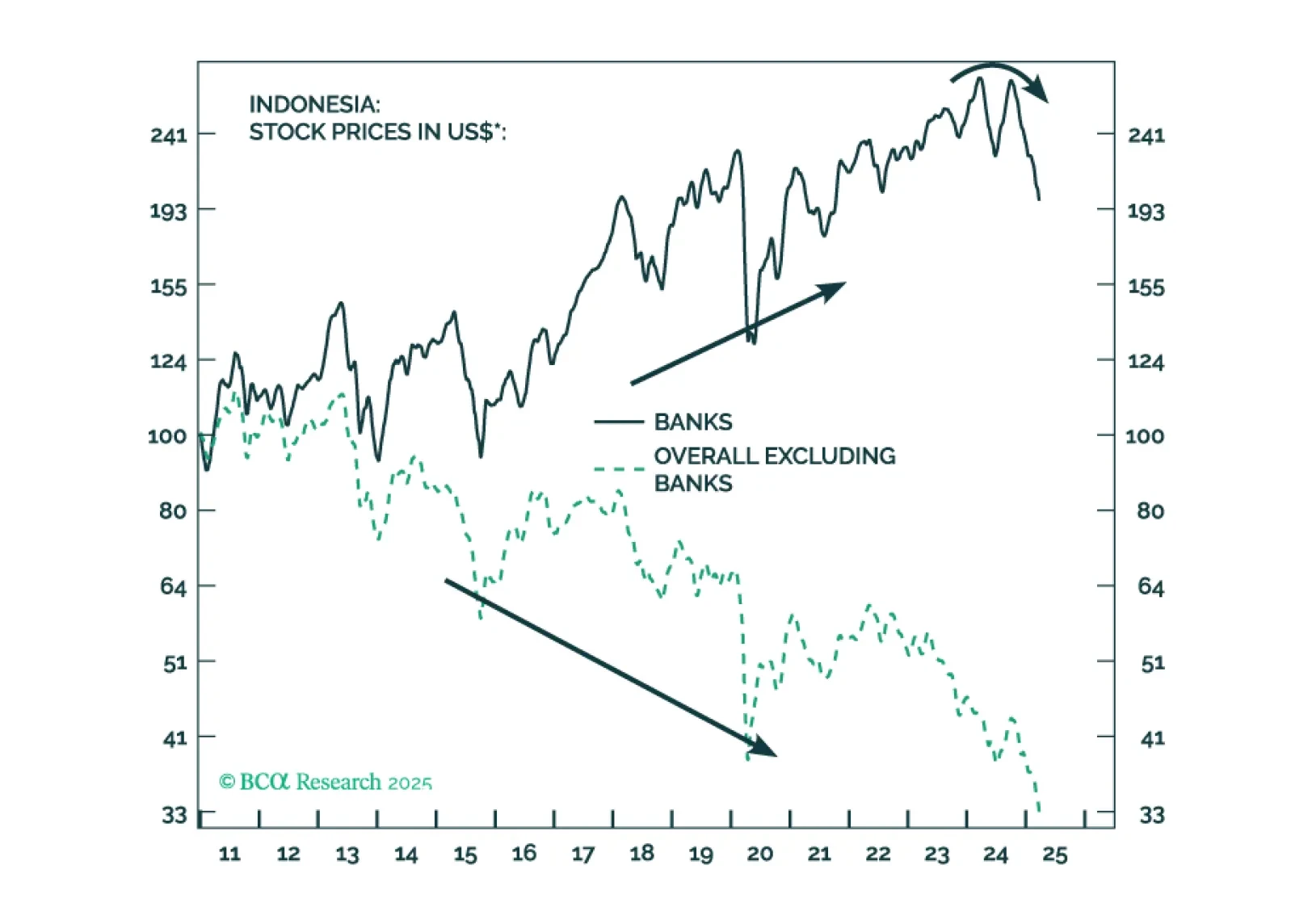
There is an ongoing regime shift in Indonesia: SOEs will be used to drive economic growth. Bank loans will accelerate, but their profit margins will shrink. Despite higher nominal growth, Indonesian equity prices in US dollar terms will not see a sustainable bull market. Downside risks to currency and upside risks to domestic bond yields have also increased.
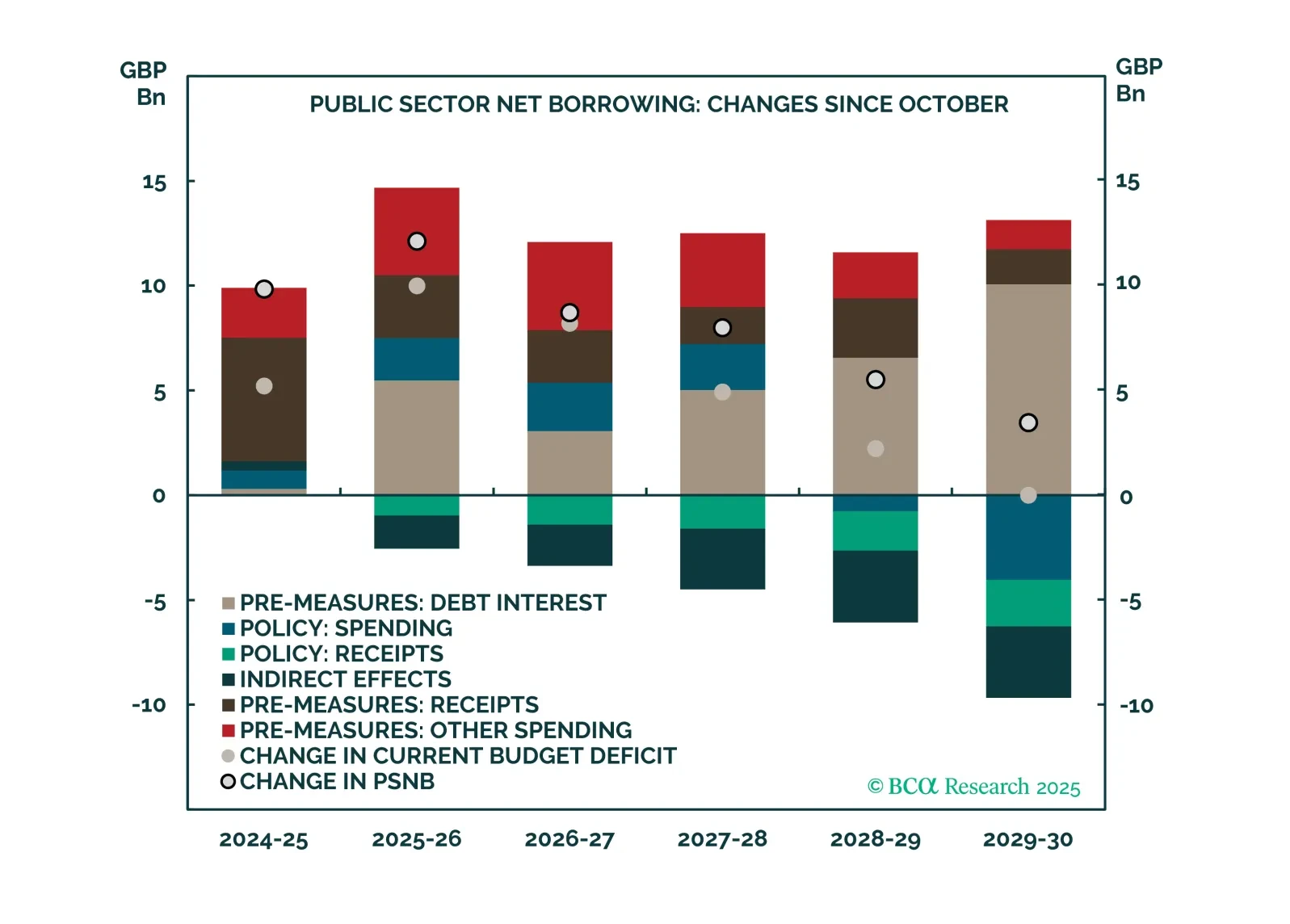
This report is a quick take on our views on UK bonds and FX, given the recent budget.

Clients have asked us repeatedly about our thoughts on the Mar-a-Lago Accord. Our readers know that we believe that the US is constrained by its median voter and the reality of geopolitical multipolarity. As such, the path of least resistance is towards a cheaper USD, which is currently being achieved through an organic macro see-saw of relative fiscal policy. The idea that the US gets to “restructure the global trading system” on its own is, therefore, ludicrous.

This report presents our interpretation of signals from the main equity, bond, and currency markets around the world. The key takeaways are: (1) Chinese stocks are behind the resilience of the EM MSCI Index; (2) Investors have become too bullish on Europe and will be disappointed; (3) The US dollar will likely rebound in the near term; (4) US long-term bond yields will be sticky in the short run; (5) The global equity selloff is not over.

The US economy faces a new investment regime characterized by tighter fiscal and easier monetary policies. The market corrected fast, and a short-lived equity rebound is likely. However, over the long term, US equities face economic headwinds.

We share with our clients a brief rundown of “Washington, DC” intelligence on the upcoming April 2 tariffs. Most of it is bearish. However, the day may mark “peak de-globalization hysteria.” President Trump is also starting his Maximum Pressure campaign against Iran. That is two such campaigns at the same time, perhaps more than the administration can handle simultaneously.

An analysis of historical data shows that Ba-rated bonds outperform other corporate credit tiers in the long-run on a risk-adjusted basis. That said, today’s fragile macro environment warrants a more cautious allocation.